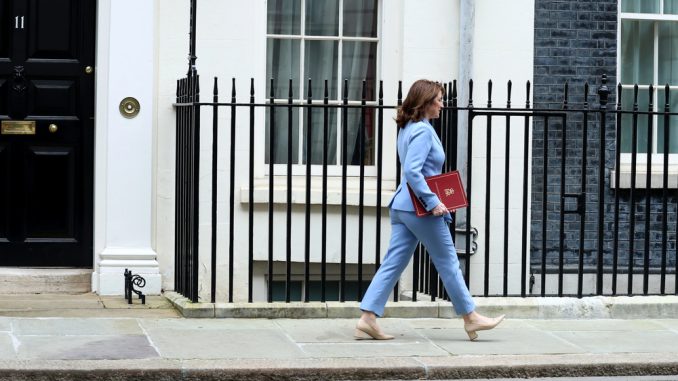
Following Rachel Reeves’ Spring Statement, Aman Parmar, Head of Marketing at BizSpace, has issued the following statement on what the updated forecasts and renewed geopolitical volatility mean for small businesses. He argues that while policy stability may help planning, the lack of immediate cost relief, particularly on energy and business rates, leaves SMEs facing continued pressure on margins, hiring and investment decisions:
“Rachel Reeves’ Spring Statement has landed exactly as billed: deliberately low-key on new policy, but high-impact for SMEs because the updated forecasts will set the tone for costs, confidence and investment decisions over the next six to twelve months.
“Stability is the headline Reeves is promoting, but there is little acknowledgement of the fragility small businesses are facing, given the renewed energy-price shock rippling through markets.
“For Britain’s small businesses, the message is decidedly mixed. On the plus side, avoiding sudden policy pivots helps planning, particularly for firms already juggling tight cashflow, higher borrowing costs and lower demand. However, the OBR’s more downbeat growth picture and the explicit warnings around geopolitical volatility and inflation risk will be another jarring reminder that 2026 is not going ‘back to normal’ when it comes to operating costs.
“What SMEs needed from today was a clear path to lowering the cost of doing business. Instead, they’ve effectively been told to wait for Autumn. Key pressures SMEs face today are not abstract: business rates remain a day-to-day drag on high streets, light industrial operators and local services, and the wider business community has been consistently asking for faster relief on energy costs and meaningful tax simplification. In this environment, the practical impact is that SMEs will be forced to keep prioritising flexibility over long-term commitments.
“The renewed uncertainty surrounding conflict in the Middle East creates an added layer of volatility that British SMEs can ill afford. The most immediate risk is to energy markets, as sustained disruption to oil or gas supply routes typically pushes up wholesale prices. This quickly filters through to higher fuel, logistics and utilities costs for small businesses already operating on tight margins.
“There is also the wider confidence effect. Heightened geopolitical tension tends to unsettle financial markets, which can lead to currency fluctuations and upward pressure on borrowing costs. For SMEs reliant on lending to manage cashflow or fund growth, even small shifts in interest rate expectations can materially affect decision-making.
“Uncertainty also impacts demand. When households and larger corporations feel cautious, spending and investment are delayed. For many SMEs (particularly those in retail, hospitality and supply chains), that hesitation translates into softer revenues. Geopolitical instability doesn’t sit on the sidelines of the UK economy; it feeds directly into our costs, confidence and cashflow.
“Small businesses are seeking predictability, and global uncertainty reinforces the need for domestic policy that reduces, rather than compounds, financial pressure: this is nowhere to be found in today’s statement.
“The Chancellor’s emphasis on credibility with markets is understandable with investors already spooked by global events, but the fact is, SMEs are the engine room of local growth, jobs and innovation. If the Autumn Budget is going to do the heavy lifting here, it must be unambiguous on SME priorities: a credible plan for business rates, support to ease energy intensity for smaller firms, and incentives that unlock investment, rather than asking businesses to continually absorb more risk.
“British SMEs have already waited too long for meaningful support from the government in these extremely difficult times. When small businesses are under pressure, growth falters; when growth falters, the whole economy pays the price.”
—
Image: Deposit Photos