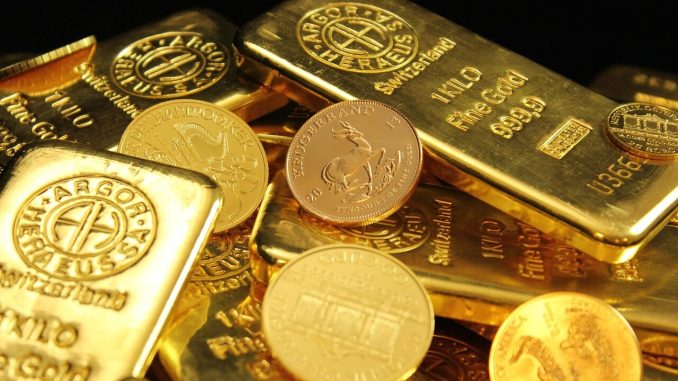
Gold prices remained under pressure at the start of the week, extending Friday’s decline and falling to a near two-week low as investors reassessed the outlook for US interest rates.
The precious metal has been hit by changing expectations surrounding Federal Reserve monetary policy following Fed Chair Kevin Warsh’s address at the Jackson Hole Symposium.
Warsh reiterated the Fed’s commitment to its 2% inflation target while highlighting that inflation remains elevated, prompting markets to price in a greater likelihood of an interest rate increase at the Federal Reserve’s September meeting.
The shift in expectations sent US Treasury yields significantly higher on Friday, creating an increasingly challenging backdrop for gold.
Tony Sage, CEO of Critical Metals, said:
“Gold remained under some pressure, extending Friday’s decline and hitting a near two-week low. The metal reacted to Federal Reserve Chair Kevin Warsh’s address at the Jackson Hole Symposium. Warsh reaffirmed the 2% target and highlighted elevated inflation currently.
“Expectations of an interest rate hike at the Fed September meeting rose as a result, pushing Treasury yields up significantly on Friday.”
Higher Treasury Yields Weigh On Gold
Gold does not pay interest, meaning rising yields on assets such as US government bonds can reduce its relative attractiveness to investors.
Although Treasury yields eased slightly on Monday, they remain elevated following Friday’s move.
The US dollar has also retreated slightly, but the softer currency has so far provided only limited support for the precious metal.
Sage said:
“While U.S. Treasury yields eased slightly today, they remain elevated and could continue to weigh on non-yielding assets like gold. The dollar retreated slightly as well but offered limited support.”
The direction of US monetary policy is now likely to remain a major influence on precious metals markets as investors assess whether the Federal Reserve is prepared to tighten policy further in response to persistent inflationary pressures.
Middle East Tensions Add Another Variable
Monetary policy isn’t the only factor potentially influencing the outlook for gold.
Investors are also watching developments in the Middle East following US military action targeting Iranian forces.
Renewed geopolitical uncertainty would ordinarily have the potential to increase demand for traditional safe-haven assets such as gold.
However, the inflationary implications of rising oil prices could complicate the picture.
A sustained increase in crude prices could add to inflationary pressure and potentially strengthen the argument for tighter monetary policy from the Federal Reserve.
Sage added:
“The metal could remain exposed to the geopolitical developments in the Middle East, where a rebound in oil prices could fuel inflation concerns again after the U.S. military targeted Iranian forces.”
September Fed Decision In Focus
Attention will increasingly turn towards the Federal Reserve’s next interest rate decision, scheduled for September 16.
Between now and then, incoming US inflation and labour market figures could play an important role in shaping expectations for the central bank’s next move.
Weaker inflation or employment data could reduce expectations of further monetary tightening and potentially provide some relief for gold.
Conversely, stronger economic figures – or further hawkish comments from Federal Reserve policymakers – could maintain upward pressure on Treasury yields and extend gold’s recent decline.
Sage said:
“Looking ahead, gold could continue to react to changing monetary policy expectations ahead of the September 16 Fed interest rate decision. Any softness in incoming inflation and labour data could ease the pressure, while firmer figures or more hawkish Fed comments may extend the decline.
“Markets will also watch for any shift in tensions in the Middle East and changes in oil prices.”
For gold investors, the coming weeks therefore present an unusual combination of competing forces.
Heightened geopolitical risk could potentially strengthen safe-haven demand, while the inflationary consequences of higher energy prices could simultaneously increase expectations for tighter US monetary policy.
With Treasury yields, the dollar, US economic data and Middle East tensions all influencing sentiment, volatility in precious metals markets could remain elevated as investors count down to the Federal Reserve’s September decision.