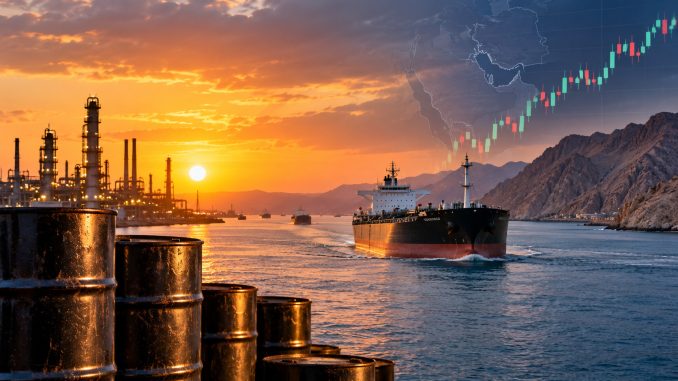
Oil prices have climbed to their highest levels in three months as escalating tensions across the Gulf renew concerns about energy supplies, shipping routes and the potential for further disruption to global markets.
Crude extended its gains on Tuesday, with markets responding to the latest incidents affecting energy facilities in Saudi Arabia and continuing disruption to shipping through the Strait of Hormuz.
Paolo Broccardo, CEO at BankPro, said the deteriorating security situation was increasing the risk of disruption to production capacity at a time when energy exports from the region have yet to return to normal.
The latest developments put renewed focus on two of the world’s most strategically important shipping routes – the Strait of Hormuz and Bab el-Mandeb – and could keep geopolitical risk firmly priced into energy markets.
Saudi Arabia Incidents Add to Oil Market Concerns
Broccardo said:
“Oil prices rose for another session on Tuesday, reaching 3-month highs as escalating tensions across the Gulf renewed concerns over regional energy flows. The latest incidents affected several energy facilities in Saudi Arabia, reviving production capacity disruption risks. The deteriorating security landscape could hinder efforts to return energy exports to normal levels. At the same time, ongoing disruptions in the Strait of Hormuz continue to reinforce the bullish backdrop for crude prices, with fewer cargoes leaving the region, according to Reuters.”
The Strait of Hormuz is particularly important to global energy markets because of the substantial volumes of oil and gas normally transported through the waterway.
Restrictions affecting tanker traffic can therefore have consequences extending far beyond the Gulf, particularly if traders believe disruption could become prolonged.
However, there are also factors capable of limiting further price increases.
Broccardo continued:
“Nevertheless, efforts to sustain tanker crossings through the waterway despite the current restrictions and security risks, in addition to exports through alternative routes, could help limit the extent of the rise in oil prices. What is more, measures to support the oil market are gradually running out of steam due to falling consumption, as seen in China in recent months, and the sale of reserves, as the US is actively doing.”
This creates competing pressures for crude markets. Geopolitical and physical supply risks are providing support for prices, while weaker demand and measures designed to increase available supplies could prevent those gains from accelerating unchecked.
European Gas Prices Also in Focus
The repercussions are not limited to crude oil.
European gas markets are also attracting attention as countries attempt to build storage levels ahead of the winter heating season.
Broccardo said:
“Another factor driving up energy prices is the heightened focus on the EU gas market, which, with no prospect of a stabilisation in supplies from the Middle East, is filling its gas storage facilities ahead of winter at the highest prices seen in the last four years, having fallen furthest behind the norm in recent years.”
The combination of elevated purchasing requirements and uncertainty over Middle Eastern energy flows means European energy security is likely to remain a significant issue for markets as winter approaches.
Higher wholesale energy costs can ultimately have wider economic consequences, potentially feeding through to businesses and consumers and complicating the inflation outlook.
Strait of Hormuz Remains Critical for Oil Prices
For investors, one of the biggest questions is what happens next in the Strait of Hormuz.
Attention is turning to diplomatic developments involving Iran and Oman and how Washington responds to an agreement concerning management of the waterway.
Broccardo said:
“Looking ahead, crude prices are likely to remain highly sensitive to geopolitical developments and shipping conditions in the Straits of Hormuz and Bab El-Mandeb. Markets will also monitor Washington’s reaction to an agreement between Iran and Oman over the management of the waterway. Any improvement in transit conditions could ease supply concerns and weigh on prices, while a hardened stance or further restrictions would tighten the physical market and renew upward pressure on crude.”
A meaningful improvement in tanker movements could therefore remove some of the geopolitical premium currently supporting oil prices.
Conversely, further restrictions, damage to energy infrastructure or an escalation in regional tensions could intensify concerns about the availability of physical crude and put renewed upward pressure on prices.
For now, the market faces a delicate balance between geopolitical supply risks on one side and weaker demand, alternative export routes and additional supplies on the other.
With oil already at three-month highs, developments in the Gulf – and particularly the ability of tankers to move safely through key waterways – are likely to remain among the most important short-term drivers for global energy markets.