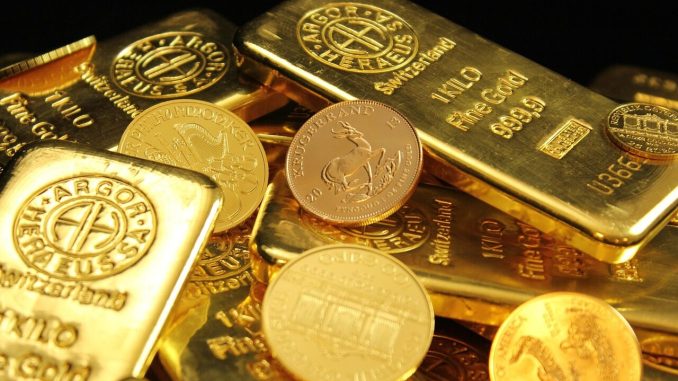
Gold prices came under renewed pressure on Monday as a stronger US dollar, elevated government bond yields and expectations of further monetary tightening weighed on the precious metal.
Investors are entering a potentially important week for global markets, with the US Federal Reserve’s latest interest rate decision expected to dominate sentiment. At the same time, rising oil prices and continuing tensions in the Middle East are adding another layer of uncertainty by increasing concerns that inflation could remain stubbornly high.
Tony Sage, CEO of Critical Metals, said the combination of a firmer dollar and expectations surrounding US interest rates was creating a difficult backdrop for gold.
“Gold was under some pressure on Monday as a firmer dollar weighed on the non-yielding bullion. A surge in oil prices amid tensions in the Middle East continued to fuel inflation concerns and reinforced expectations that the U.S. Federal Reserve could raise interest rates at its policy meeting this week, pressuring the yellow metal.
“Investors continue to price in last week’s inflation reports ahead of Wednesday’s Fed meeting. Last week’s data pushed September hike odds towards 87%. U.S., European, and Japanese yields remain elevated, keeping the opportunity cost of holding gold higher. The possibility of more interest rate hikes by major central banks, amid higher oil prices and geopolitical developments, could further support yields and keep gold under strain.
“Looking ahead, the Fed decision is the main event. A hawkish signal at the press conference could lift yields further and pull gold down. Any soft messaging from the Fed may ease tightening bets and help gold recover. Investors will also keep a close eye on oil prices and developments in the Middle East as they remain near-term risks.”
Why Higher Interest Rates Matter For Gold
Gold does not pay interest or generate a yield, meaning that its relative appeal can decline when returns available from government bonds and other interest-bearing assets rise.
Higher bond yields therefore represent an important headwind for bullion, particularly when accompanied by a stronger US dollar. Because gold is predominantly priced in dollars internationally, an appreciating dollar can make the metal more expensive for buyers using other currencies.
However, the picture is complicated by gold’s traditional role as a safe-haven asset.
Geopolitical uncertainty can increase demand for bullion as investors seek assets perceived as stores of value during periods of heightened risk. The current situation therefore presents competing forces: geopolitical concerns could potentially support safe-haven demand, while higher inflation expectations, rising yields and the prospect of tighter monetary policy could work against gold.
Oil Prices Add To Inflation Concerns
Energy markets could prove particularly important to the outlook.
Higher oil prices can feed through to transport, manufacturing and consumer costs, potentially making it harder for central banks to bring inflation sustainably under control. If policymakers believe renewed energy inflation threatens their progress on prices, expectations that interest rates will remain higher for longer could strengthen.
That scenario would potentially maintain upward pressure on government bond yields and the dollar, creating further challenges for gold.
Conversely, any meaningful easing in geopolitical tensions or fall in oil prices could reduce some of those inflationary concerns and alter expectations for monetary policy.
Federal Reserve Takes Centre Stage
For gold traders, attention will now turn firmly towards the Federal Reserve.
The interest rate decision itself will be closely watched, but markets are also likely to scrutinise the language used by policymakers and signals about the future path of borrowing costs.
A more hawkish message – indicating that policymakers remain concerned about inflation and are prepared to maintain or increase restrictive monetary policy – could support US Treasury yields and the dollar while putting additional pressure on gold.
A softer message could produce the opposite reaction. If investors interpret the Fed’s comments as suggesting that the tightening cycle is approaching its limit, expectations for future interest rates could ease, potentially providing some support for bullion.
The reaction could therefore depend as much on what Federal Reserve officials say about the months ahead as on the immediate rate decision.
With monetary policy, energy prices and geopolitical risk all pulling markets in different directions, volatility could remain elevated. For gold, Wednesday’s Federal Reserve announcement may provide an important indication of whether the latest weakness develops into a deeper correction or gives way to renewed demand for the precious metal.