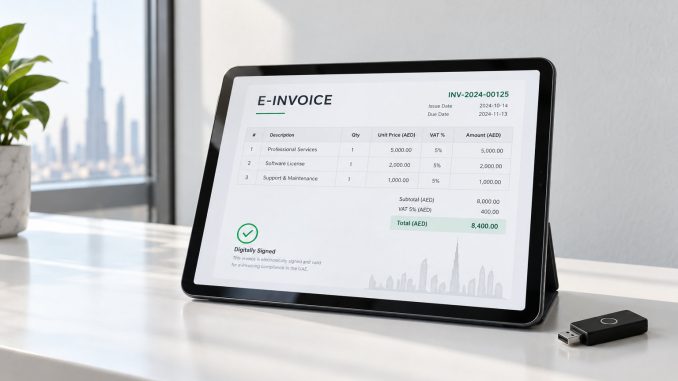
Businesses in the UAE, particularly those operating in Dubai, face new challenges and opportunities as e-invoicing regulations reshape tax compliance processes. With digital transformation accelerating across industries, understanding what compliance entails is now critical. Organisations must keep pace with evolving requirements to maintain efficiency and accuracy in their financial operations.
The introduction of e-invoicing in the UAE is driving a significant shift in how companies manage, store, and submit tax documentation. This change focuses on increasing transparency, strengthening recordkeeping, and streamlining compliance tasks. However, it is important to note that this service is only in Dubai, so businesses located outside Dubai are not affected by its current scope. For Dubai-based firms, adapting to these new compliance standards is essential for meeting regulatory expectations and supporting long-term business growth.
Core e-invoicing requirements for UAE businesses
E-invoicing mandates in Dubai set clear expectations for the creation, validation, and submission of digital invoices. Businesses must ensure all invoices are generated in a structured electronic format that conforms to UAE tax authority specifications. This approach not only reduces paperwork but also facilitates faster processing, validation, and automated reporting procedures for tax authorities.
Another critical requirement involves secure digital signatures and robust archiving systems. By storing invoices electronically, companies support audit readiness and can efficiently retrieve documents when required. These processes establish a tamper-proof digital trail, reducing the risk of data manipulation or document loss and enabling transparent compliance audits. Adopting e-invoicing is integral to maintaining trustworthy tax records and streamlining future reporting.
Compliance also extends to the mandatory inclusion of specific data fields within each electronic invoice. These fields typically include unique invoice numbers, transaction dates, supplier and customer tax registration numbers, itemised descriptions of goods or services, applicable tax rates, and total amounts. The UAE tax authorities have established standardised formats to ensure consistency across all submitted invoices, making it easier to validate and process large volumes of transactions. Businesses must configure their invoicing systems to automatically populate these required fields, minimising the risk of omissions that could trigger compliance issues or delays in invoice approval.
Compliance process changes and operational impact
Switching to e-invoicing requires businesses to revisit and update existing tax compliance workflows. Accounting, finance, and IT teams must coordinate to ensure that new processes, such as electronic validation steps, are properly integrated into day-to-day operations. This collaboration helps organisations reduce manual intervention and rely on automated checks to meet regulatory obligations.
The importance of data accuracy increases, as incorrect or incomplete information can lead to rejected invoices or compliance penalties. For example, correct customer data, tax details, and coding must be maintained to meet approval requirements. Strong internal controls, together with comprehensive employee training, are essential for preventing errors and supporting ongoing adherence to UAE e-invoicing rules.
Organisations must also establish clear timelines and responsibilities for invoice submission and validation cycles. E-invoicing regulations often specify strict deadlines for issuing invoices after transactions occur, as well as timeframes for addressing rejected or flagged invoices. Finance teams need to implement monitoring dashboards that track invoice status in real-time, allowing them to quickly identify and resolve issues before they escalate into compliance violations. For many firms, e-invoicing in the UAE also supports better cash flow visibility by enabling more consistent billing data and faster reconciliation. This proactive approach to invoice management not only ensures regulatory adherence but also improves cash flow visibility and strengthens relationships with customers and suppliers through more reliable and transparent billing processes.
Technology integration, ongoing compliance, and Dubai-specific considerations
Integrating e-invoicing platforms with existing ERP and accounting systems is essential for sustained compliance and operational efficiency. This integration streamlines the flow of information from invoice creation to reporting, supports application of digital signatures, and ensures that records can be archived to meet UAE regulatory standards. When scaled effectively, e-invoicing in the UAE can also help standardise controls across entities with different operational models.
For companies operating in Dubai, maintaining compliance also means staying up-to-date with regulatory changes and adapting quickly to new guidelines. Ongoing monitoring of official announcements and flexibility in system design help businesses avoid disruptions. As e-invoicing in Dubai continues to evolve, regular training and interdepartmental collaboration are needed to ensure that all employees remain aware of current rules and that the company maintains its compliance posture.