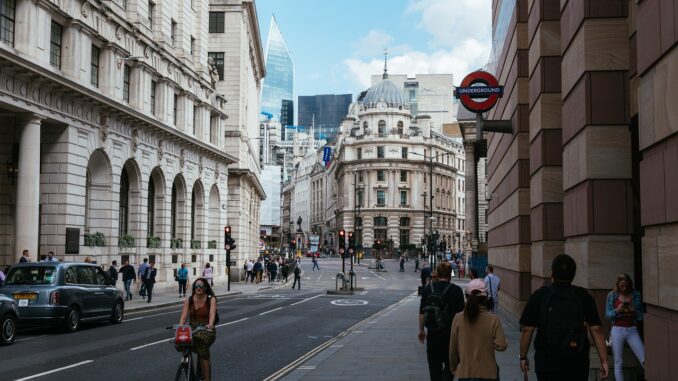
The Bank of England (BoE) is widely expected to announce a 25 basis point reduction in its base interest rate tomorrow, February 6, 2025, lowering it from 4.75% to 4.5%. This decision comes amid concerns about economic stagnation and inflationary pressures, as policymakers seek to balance growth with price stability.
Economic Context
Recent data suggests that the UK economy is exhibiting minimal growth. The S&P Composite Purchasing Managers’ Index (PMI) increased slightly to 50.9 in January from 50.4 in December, signalling modest expansion. However, price pressures and declining employment complicate the economic outlook. Inflation has also been easing, with the annual rate dropping to 2.5% in December 2024 from 2.6% in November, reinforcing the case for a rate cut.
Industry Predictions
Most analysts expect the BoE to proceed with a 25 basis point cut in the upcoming meeting. Economists surveyed by Reuters largely anticipate this move, driven by the need to stimulate economic activity. Meanwhile, financial markets have already adjusted their expectations, with interest-rate swaps data indicating a 92% probability of a rate cut.
Expert Insights
Chris Arcari, Head of Capital Markets at Hymans Robertson, commented on the market expectations and potential challenges facing the BoE:
“Markets are pricing a 0.25% pa cut to the Bank of England’s (BoE) base rate tomorrow, with forecasts for a further two cuts in 2025, taking the base rate to 4.0% pa by year-end. While interest rates’ current level allows for a modest reduction, the stagflationary shock from the national insurance (NI) increase announced in the Autumn Budget, alongside high underlying measures of inflation, means the BoE is likely to adopt cautious messaging about cuts.
Sure, the economy is showing little momentum, but the BoE’s mandate is price stability. And there are plenty of datapoints to keep it vigilant. The disinflation in goods, food, and energy prices is now in the rear-view mirror and set to become a positive contribution in the year ahead. Consensus forecasts suggest UK headline inflation will rise to 3.0% year-on-year in the autumn. There are also questions about whether the BoE will be able to ‘look through’ the forthcoming rise in headline inflation. Average weekly earnings growth rose 5.6% year-on-year in the three months to end-November, contributing to upwards pressure on sticky service-sector inflation, which was up 4.4% in the 12 months to end-December.
Having said that, the BoE is going to have to walk a tightrope in the year ahead. The economy is stagnating, and the announced NI increase has driven growth and inflation in opposite directions: employment intentions have fallen while expected price growth and services output prices have risen, as employers cut back recruitment or look to pass on the NI increase via prices. Should weaker employment growth result in dwindling domestic demand and a larger output gap, reducing inflation pressure, we expect the BoE to cut rates more quickly. However, if inflation pressures persist, despite the weak growth backdrop, the central bank is likely to stay cautious.”
Future Rate Expectations
Looking ahead, financial institutions anticipate further rate cuts throughout 2025. Morgan Stanley projects up to five additional reductions this year, potentially bringing the base rate down to 3.5% by year-end, should economic conditions warrant aggressive easing.
Market Reactions
Anticipation of the BoE’s decision has already influenced major financial institutions. Lenders such as Barclays, Coventry Building Society, Yorkshire Building Society, and Halifax have preemptively lowered their mortgage rates by 0.25 to 0.3 percentage points, aligning with expectations of monetary easing.
Conclusion
Investors, businesses, and consumers alike are closely monitoring the BoE’s decision, as it will have significant implications for borrowing costs, inflation, and overall economic sentiment. While a rate cut appears imminent, the central bank’s messaging will be critical in shaping expectations for further monetary policy adjustments in 2025.
