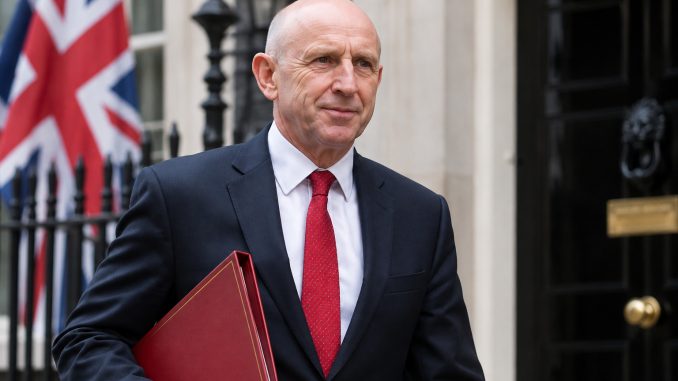
Elevated UK government borrowing costs are putting increasing pressure on the public finances ahead of Chancellor John Healey’s first Budget, according to deVere Group CEO Nigel Green, who has compared the gradual repricing of UK debt with the turmoil surrounding the 2022 mini-Budget.
Green argues that the current situation differs from the rapid market reaction seen four years ago because pressure has accumulated over a longer period.
His comments come ahead of the Budget on 28 October, a date confirmed by HM Treasury. The government has said the Budget will be based on “fiscal discipline” and will meet its fiscal rules.
Long-term UK borrowing costs have recently reached levels not seen for decades. Reuters reported last week that the 30-year gilt yield had touched 5.96%, its highest since 1998, while the 10-year yield had reached its highest level since 2007.
Green described the situation as Britain being “slowly Truss’d”, referring to the gilt-market turmoil that followed Liz Truss’s 2022 mini-Budget.
He said:
“The bond market is doing to the UK’s finances, in slow motion, what it did during the 2022 mini-budget meltdown, and Chancellor John Healey walks into his first Budget on 28 October with a far weaker hand than the official forecasts suggest.
“Everyone remembers the Truss moment because it happened in a week. This one’s happening in slow motion, and the damage could end up bigger.
“Borrowing costs are already higher than when the bond market went mad in 2022. There’s just no single day, no single decision, to point at.”
The comparison is Green’s assessment rather than evidence that current conditions are equivalent to the 2022 crisis. The present rise in yields is occurring against a different economic and monetary backdrop, including higher global borrowing costs and renewed inflation concerns.
Higher Borrowing Costs Squeeze The Chancellor
One consequence of rising gilt yields is the potential impact on the government’s debt-interest bill.
Green argues that movements in bond markets are already reducing the Chancellor’s flexibility ahead of the Budget, with higher debt-servicing costs potentially leaving less room for tax or spending decisions.
He said:
“The Chancellor’s already lost almost half his headroom and he hasn’t stood up at the despatch box yet for the Budget.
“The market’s writing the first draft of this Budget. Every basis point makes the arithmetic harder, and every tax rise or spending restraint gets judged against a bond market that’s already moved.”
The precise amount of fiscal headroom available on Budget day will ultimately depend on the latest economic and fiscal forecasts and the government’s policy decisions.
Bank Of England Changes Gilt Strategy
The Bank of England has meanwhile announced significant changes to the way it will unwind the government bonds accumulated through quantitative easing.
On September 17, the Monetary Policy Committee maintained Bank Rate at 3.75%, although three of its nine members voted for an increase to 4%.
The Bank also set out a multi-year plan for unwinding its remaining QE portfolio. It intends annual active sales of £20 billion alongside maturing gilts, producing an average annual reduction of £46 billion through to 2034. It will separately retain £120 billion of the longest-dated gilts to back banknote issuance.
Markets responded positively to the announcement, with gilt prices rising and the 30-year yield falling after the decision.
Green nevertheless believes structural changes in demand for long-term government debt remain important.
He said:
“You can’t reverse a trend. The old reliable buyers of long-dated debt are fading, the supply keeps coming, and global bond markets are already jittery. It’s a combustible mix.”
The Bank itself has acknowledged structural changes in the UK bond market that have reduced demand for long-term government debt. However, it says much of the increase in long-term bond term premia since 2022 reflects global policy uncertainty and high government-bond issuance internationally, rather than UK-specific factors alone.
Inflation Adds To The Challenge
The backdrop is further complicated by inflation.
UK CPI inflation reached 3.1% in August, while the Bank of England has warned that continued volatility in global energy costs could increase inflationary pressures.
Governor Andrew Bailey said this month that the longer higher and more volatile energy prices persist, the greater the potential effect on inflation and the greater the possibility that Bank Rate may need to rise.
That creates a difficult combination for policymakers: elevated government borrowing costs alongside uncertainty about the future path of interest rates.
Why Gilt Yields Matter Beyond Westminster
Higher gilt yields do not affect only government finances.
Government bond yields influence pricing throughout the financial system and can feed through into mortgage rates, corporate borrowing costs and the valuation of pension assets and liabilities.
Green said:
“The pain won’t stay in Whitehall. Higher gilt yields feed into mortgage pricing, corporate borrowing costs and pension valuations, spreading the strain across households and businesses.
“Global bond markets are setting the tone, but the UK’s got its own vulnerabilities and 28 October is where they get tested.”
He argues that investor reaction to the Budget will depend heavily on whether markets consider the government’s tax, spending and borrowing plans credible.
Green concluded:
“The bond market will judge whether there’s credibility and the sums work at the Budget, and right now it’s casting a very sceptical eye over them.”
The October Budget will therefore arrive against a challenging backdrop of higher long-term borrowing costs, above-target inflation and uncertainty over the direction of interest rates.
While comparisons with the 2022 gilt crisis remain a matter of interpretation, the movement in bond markets means the cost of servicing government debt – and the confidence of investors buying that debt – will be an important part of the economic environment surrounding Healey’s first Budget.